A new administrative culture appears to be taking shape in West Bengal. If former chief minister Buddhadeb Bhattacharjee’s governance philosophy was summed up by the phrase “Do It Now,” and Mamata Banerjee’s administration emphasised timely completion of work, the BJP government under Chief Minister Suvendu Adhikari has introduced its own guiding principle: “Read the files, understand them, but do not delay decisions.”
With a largely inexperienced ministerial team at the helm, the state government has moved swiftly to familiarise its ministers with the intricacies of governance and administrative procedures. Barring CM Adhikari and senior leader Tapas Roy, most members of the new Cabinet have little prior experience in handling ministerial responsibilities.
Advertisement
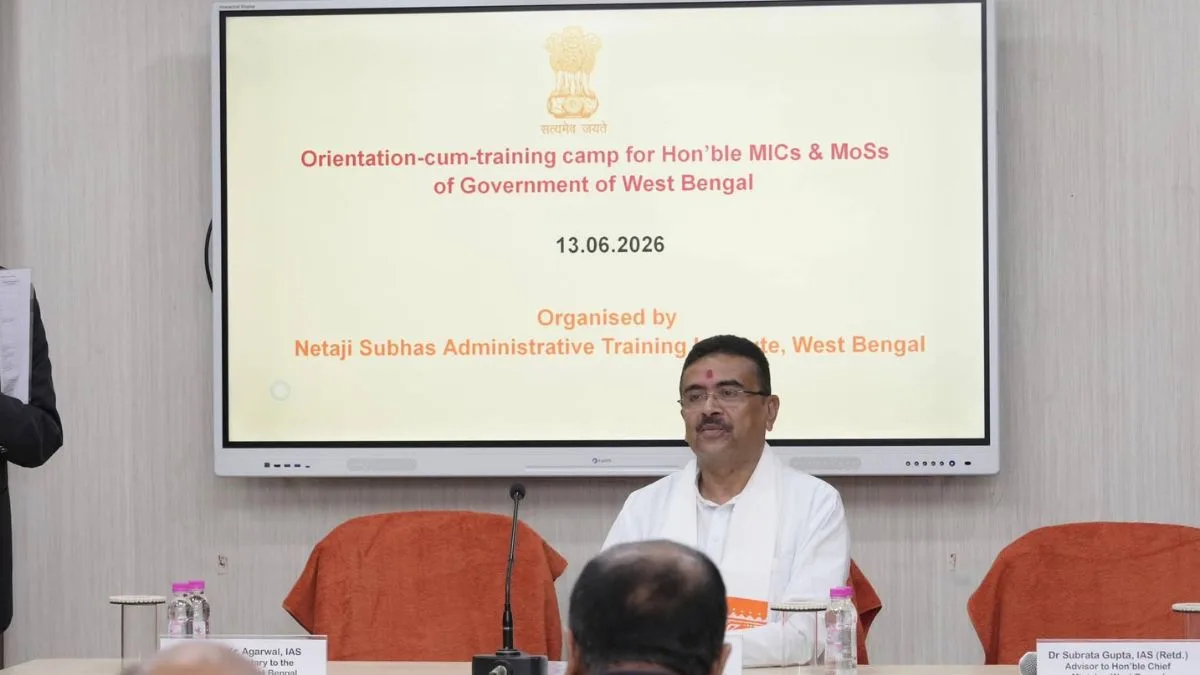
To bridge that gap, a special orientation and training programme was organised at the Administrative Training Institute (ATI) in Salt Lake. The day-long session aimed to provide ministers with a practical understanding of government functioning, file management and decision-making protocols.
The training programme, held from 11 a.m. to 3 p.m., focused on the fundamentals of administrative work. Senior bureaucrats explained how official files are processed, how notes should be recorded, and the procedures involved in moving files through various levels of government.
Chief Secretary Manoj Agarwal, Director General of Police Siddhinath Gupta and several senior departmental secretaries conducted the sessions.
Adhikari addressed the ministers at the conclusion of the programme and outlined his government’s vision for governance and public service delivery. According to sources, he stressed the importance of prompt decision-making and warned against allowing files to remain pending unnecessarily.
Ministers were advised to consult departmental secretaries whenever clarification was required and to seek guidance from the Chief Minister’s Office if needed. However, the message from the top was clear: administrative delays would not be tolerated.
Political observers view the initiative as an indication of the new government’s emphasis on efficiency, accountability and swift implementation of policies. By organising a structured training programme within the first month of assuming office, the administration appears keen to ensure that ministers are equipped to navigate the complexities of governance from the outset.
Whether this early focus on administrative discipline translates into faster decision-making and improved governance remains to be seen. For now, the Chief Minister has made his expectations unmistakably clear — understand the process, seek advice when necessary, but keep the wheels of government moving.